

my story 🚀

We’ve been passing by the “largest bounce house popup in the world” regularly all summer, so the kids were delighted to finally have a chance to visit.
fun facts 🙌
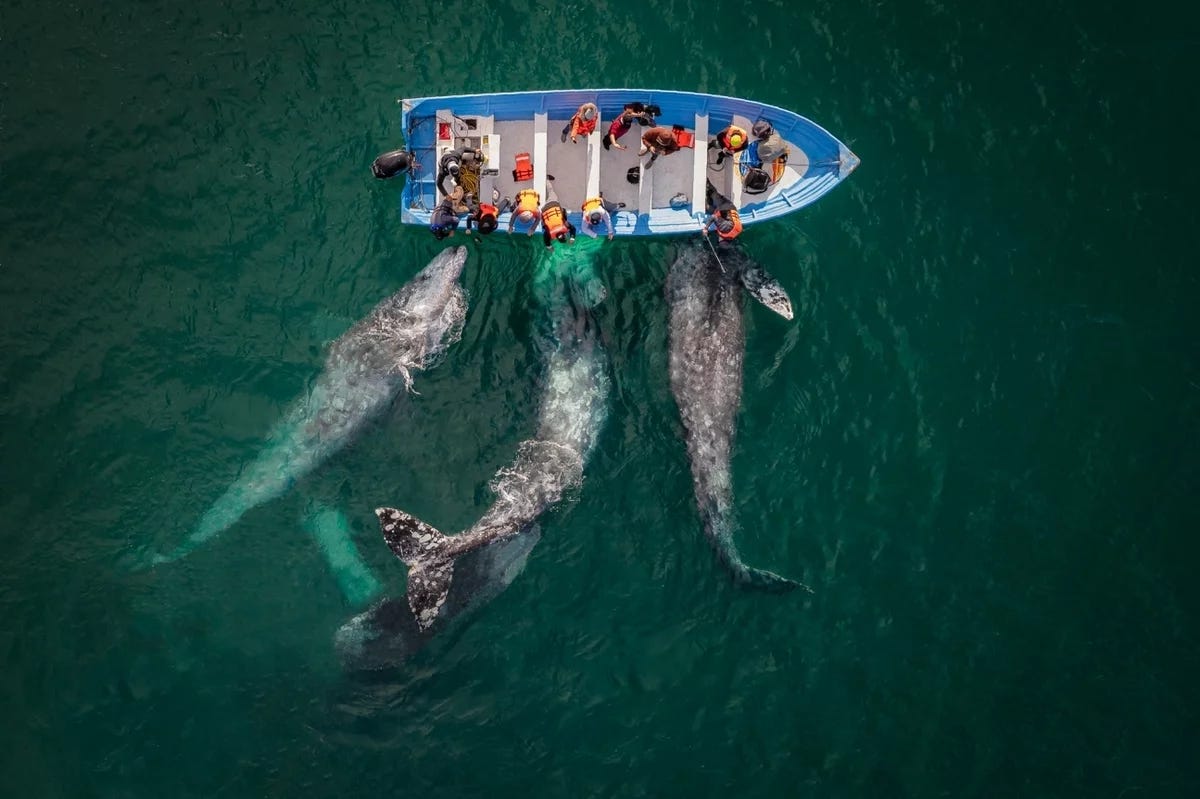
Drone Photo Award winners capture the extraordinary beauty of the ordinary. Remarkable! ~ learn more
Just add weights to skinny pigeons and they'll stage a coo. Pigeons have a social dynamic, and the highest status birds are the heaviest. These researchers decided to attach weights to some of the lighter, subordinate birds. Well, guess what… They became more aggressive, rising up the pecking order as a result. ~ learn more and more
About the Tigris river. “The Tigris River, which borders Mesopotamia in the Fertile Crescent, has been a key source of irrigation, power, and travel that dates back to the earliest known civilizations.” ~ learn more
oh, chicago 🏆
I was about to share a ridiculous story about a man charged this week for armed carjacking while out on bail for another armed carjacking and a separate felony gun case. I decided I want to share positive news about Chicago instead. Please send me stuff!
tech, startups, internet ⚡
Venture scale vs. venture risk. “There is nothing inherently “wrong” with venture capital. Its impact and ability to fund, and rapidly scale, businesses is undeniable and highly valuable. But there is an underlying business model driving behavior that many overlook or ignore until they can’t deny its impact.” ~ learn more
The fracking of information. “Large language models enable fracking of documents. Historically, extracting value from unstructured text files has been difficult. But LLMs do this beautifully, pumping value from one of the hardest places to mine.” ~ learn more
better doing 🎯
Rocks, Pebbles, Sand: How to implement in practice. This is a tactical guide for setting business goals. “A Rock must deliver dramatic, measurable impact, not merely “incremental improvement.” … This is where teams most often fall short: Not delivering enough impact to justify their investment of time.” ~ learn more
to your health ⚕
The US health crisis. I really enjoyed this interview of Justin Mares on the Invest Like The Beset podcast. Justin rattles off statistics and data about the problems in the US food and health systems with the fluency of a politician. But he swears too, so it’s even better. “We cover the underlying problems in the US healthcare system, his experiences building and investing in consumer brands, and the most interesting ideas around nutrition and health today.” ~ learn more
The geography of madness. What starts as a book review ends as an eye-opening view of humanity’s ability to manifest our expectations. “A culture-bound mental illness is one that only affects people who know about it, and especially people who believe in it. … It sometimes spreads contagiously: someone gets a first case, the rest of the village panics, and now everyone knows about it / believes in it / is thinking about it, and so many other people get it too.” ~ learn more
retail therapy 💸
The evolution of financial advice. “The history books make it seem like everyone was wiped out during The Great Depression stock market crash but most people didn’t even own stocks back then. … Merrill Lynch tried to change all that when they tasked Louis Engel with creating the first modern advertisement for the stock market in 1948.” ~ learn more
under the microscope 🔬
Life finds a way. “The team found that the streamlined cell can evolve just as fast as a normal cell—demonstrating the capacity for organisms to adapt, even with an unnatural genome that would seemingly provide little flexibility.” ~ learn more
A urine test for brain cancer. “Researchers have developed a novel way of detecting brain cancer, using nanowires to ‘catch-and-release’ DNA in urine, enabling them to detect mutations that signify the presence of a brain tumor. Their method may one day mean that invasive tissue biopsies are no longer required.” ~ learn more
More signs that resistance training protects brain from Alzheimer’s. Note that this is a study done in an animal model of Alzheimer’s disease, so it’s an imperfect proxy for humans. But it’s probably a safe bet that resistance training doesn’t harm! “After four weeks of training, the mice with cognitive mutations that had the heaviest weights attached while undergoing physical activity were found to have normal levels of corticosterone – the same as the healthy animals – and fewer beta-amyloid plaques in their brain tissue.” ~ learn more